
Decision from Data: Building a Data-Driven Company Culture
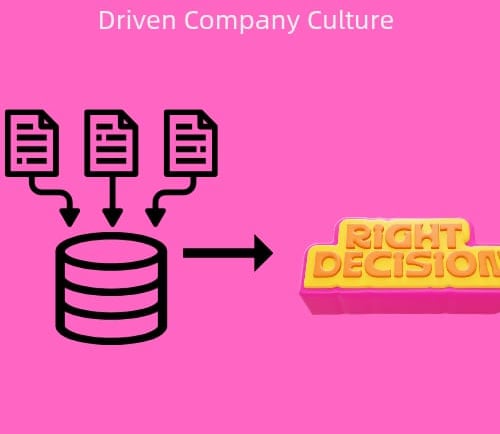
Just imagine—every day thousands of pieces of information are piling up in your hands, but you only hide them inside files and do not use them. It’s just like buying fresh vegetables from the market, arranging them in the kitchen, but not cooking. Just as the vegetables will rot, in the same way, if not used, the information will also be of no use. But if you use it in an appropriate way, then this data itself can be the key to the prosperity of the company.
Poli Khatun
10/17/20255 min read
Importance of data-driven decisions
Today’s business can no longer be run only by “trusting experience.” Experience is valuable indeed, but if decisions are made only on the basis of feelings, the chances of mistakes are much higher. Data opens our eyes, presents the real picture.
A restaurant owner can know on which days of the week more customers come, and on which days the chairs remain empty.
Online businesses know which advertisement is attracting more customers, and in which one, money is being spent but no results are coming.
Such small decisions make the business sustainable and competitive.
What does data-driven company culture mean?
Data-driven company culture means—ensuring the use of data at every level, in every decision of the company. Not just the manager or the owner, even field workers should be able to understand the data and learn from it to work better.
In one sentence, instead of “I think,” the real purpose is to build the perspective of “Data says.”
Steps to Build a Data-Driven Culture:
1. Change of mindset
First of all, a change of mindset is needed. Many think, data is only for big companies. But in reality, from small shops to medium businesses—use of data is possible everywhere.
Example:
Suppose the teachers of the coaching center, writes down students' daily test results or homework scores. Then they can understand which subjects or parts of subjects more students are doing well in and which ones are causing problems. With the help of this data, he/she can plan lessons better in the future and help students improve.
2. The right way of collecting information
We have many ways to collect data.Those can be Writing in a notebook, using mobile apps, or software. The most important thing is that the information should be correct and dependable.
Example:
If a clothing seller keeps information about customer age, gender, and purchased products, in the future he can understand which age group buys which type of clothing more.
3. Reaching information to everyone
If data remains only in the hands of the owner or manager, then culture is not created. It is necessary to show this information to employees and field-level people too. Only then,they will understand how important their work is.
4. Presenting data in simple language:
There is no need to confuse employees with complex graphs or hard reports. The simpler the information can be explained, the more effective it is.
Example:
“This month 30% more customers came to our shop”—everyone can easily understand this.
5. Use of data in decisions:
Data is not just for seeing, but for using like;
-Bringing new products,
-Increasing or decreasing budget in advertisement
-Improving customer service
If these decisions are taken on the basis of data, then the results are much more effective.
Examples of Data-Driven Decisions:
1. Retail shop
The shopkeeper noticed, sales are low on Thursdays in the week. He decided to give a special offer on that day. After a few weeks, he saw the number of customers increased on Thursday.
2. Restaurant
In a restaurant, records were kept of how many customers come daily, which food is ordered the most. Later it was seen, chicken items are very popular, but some vegetarian foods are hardly ordered. As a result, vegetarian items were reduced and chicken items increased.
3. Online business
An online seller ran two types of advertisements. By looking at the data, he understood, from the first advertisement 100 people clicked, but only 5 purchased. On the other hand, from the second advertisement 50 people clicked, but 15 purchased. So he stopped the first advertisement and increased the budget for the second.
Benefits of Data-Driven Culture:
In today’s era, information or data is the most valuable asset. Before, in business or any organization while making decisions, a lot had to rely on guesswork, experience, or personal opinions. But now if data is in hand, those decisions can be taken more clearly. If an institution or organization builds a data-driven culture, then they not only can make good decisions but also their chances of surviving and moving ahead increase greatly. Below are a few major benefits of data-driven culture discussed in detail.
1. Easy to make the right decision
If data is available, there is no need for guessing or assuming while making decisions.
Example:
One can take the example of a farmer. Earlier they used to farm by guessing the weather. Now if they use weather information or satellite data, they can know in advance when it will rain or whether drought may come. This reduces the risk of crop damage a lot.
2. Costs can be saved
By using data, unnecessary costs are reduced.
Example:
Take the example of a factory. If they analyze data and understand in which machine more electricity is being consumed or where wastage is happening, then they can fix that part. This will reduce costs and increase profits.
3. Customer experience improves
In today’s world, customers do not just buy products, they also buy experiences. By using data, it can be understood what customers really want.
For example, if a mobile app sees that most users log in at night, then they can offer special offers at night time.
This will make customers happy because they will get more of what they like.
4. Employee morale increases:
People working in an organization also benefit from data. When they see the results of their work in numbers or charts, they get more motivation.
Example:
If a sales team sees that because of their efforts sales increased by 20% compared to the previous month, then they will want to work even better.
Data is not only for the owner or manager, it also works as a strength for employees. Because it shows them the results of their efforts directly.
5. Staying ahead in competition
Competition in today’s market is very high. Those who know how to use data are always one step ahead.
Example:
Examples can be taken of online shopping platforms. They analyze every customer’s likes and dislikes, past purchases, even how long they viewed which item. Then they suggest items according to the customer’s preference. This brings customers back.
On the other hand, those organizations that do not do this may only give general advertisements, whose results are not very good. That is why those who use data can capture the market quickly.
All in all, data-driven culture is not only for big companies, but useful for everyone from small shops to schools, hospitals.
Challenges in Building a Data-Driven Culture:
1. Fear of change
Many think, new things mean trouble. So they show reluctance in using data.
2. Lack of correct information
If decisions are made on the basis of wrong information, the risk increases even more.
3. Discomfort in using technology
Many do not feel comfortable using software or apps.
4. Lack of time and skills
Data collection and analysis are time-consuming. Not everyone may have that skill.
How is the solution possible?
Giving training to employees.
Starting small, like: keeping daily sales information.
Using simple technology.
Encouragement from leadership level.
Vision for the Future
In today’s time, data is the new fuel. Just as life cannot be imagined without electricity, in the same way, future business cannot be imagined without data.
Those companies that start working using data from today, that is, build a data-based culture, they will be the most successful in the future.
Conclusion
Data shows us the truth like a mirror. Who is working, where improvement is needed, where costs can be reduced—all is hidden inside data. The only need is to use that data properly.
Make it a habit to ask in every decision—“What is my data saying?” The answer to this question will take you to the path of sustainable growth and success.