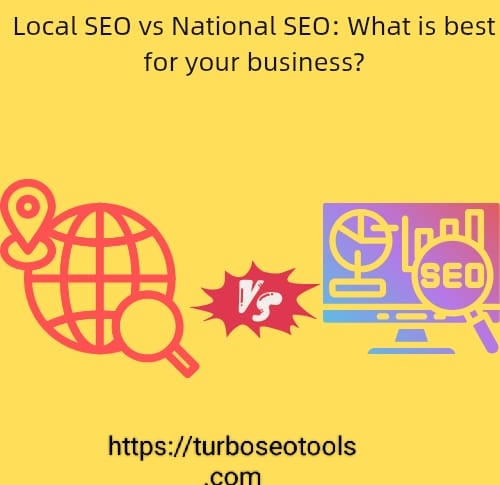
Local SEO vs National SEO: What is best for your business?
Guess, you have opened a new shop. You are selling beautiful clothes, delicious food, or some service. But the problem is — people don’t know about your shop. What will you do then? At that time, the importance of SEO comes in. SEO means “Search Engine Optimization” — it is a strategy that brings your business in front of people on Google, Bing, or other search engines. But inside SEO there are two big types: Local SEO and National SEO. Which one is good for your business depends on your business type, goal, and budget.
Poli Khatun
10/17/20254 min read
1. What is Local SEO?
Local SEO is the strategy through which your business is shown in a specific area, city, or region.
Simple example: Suppose you run a Cafe. You want that when people nearby search “coffee shop,” your shop appears first. For that, you have to use Local SEO.
Benefits of Local SEO: Local customers can find easily. Better results at lower cost. Effective for very specific audiences. Main elements of Local SEO: Google My Business (GMB) listing — your shop name, address, phone number, working hours. Local keywords — such as “city name + service” when searched, so your business appears first. Local reviews — customer reviews, ratings, photos, etc. Local links — links from local websites or newspapers related to your business.
Example: Suppose you have a leather shoe shop. You want to ensure through Local SEO that when someone searches “city name + leather shoes” your shop appears first.
How to do Local SEO:
Create and update Google My Business. Use local keywords — your business name, area name, service-related keywords. Collect reviews — ask customers for reviews. Build local links — links from local news, blogs, or directories. Mobile optimization — site easy to use on mobile.
Simple example: Suppose you run a flower shop. You update your shop’s photos, address, and phone number in Google My Business. Along with that, you use keywords like “city name + flower shop.”
2. What is National SEO?
National SEO is the strategy through which your business is shown across the country or a large region. It is a large range of marketing strategies.
Simple example: Suppose you run an online e-commerce site where products are sold nationwide. Then you have to use National SEO so that people across the country can find your website.
Benefits of National SEO: Wide market reach. Easy brand building. Online business expansion
Main elements of National SEO: Broad keywords — such as “shirt online” or “lady dresses.”Large content planning — blogs, videos, product descriptions. Backlink building — getting links from big websites. Site speed and technical improvements — fast loading and mobile-friendly site.
Example: Suppose you have an online bookstore. You want that when people search “buy books online” people from across the country come to your site. Then National SEO is needed. The major differences between Local SEO and National SEO are given below—
Target Audience: Local SEO: Focus on people of a specific city or area. National SEO: Targets people across the whole country.
Keyword Type: Local SEO: Keywords with the name of a place, like “Restaurant in New Jersey.” National SEO: General keywords, like “Best online shop.” Competition: Local SEO: Relatively less competition. National SEO: More competition, because businesses across the country are competing. Budget: Local SEO: Less cost. National SEO: More cost. Time to Get Results: Local SEO: Results come quickly. National SEO: Takes time, results come slowly. Direct Sales Impact: Local SEO: More direct impact on sales. National SEO: Mainly helps brand development, impacts sales slowly. In this way, keeping the differences in mind makes Local and National SEO easy to understand. Which one is good for your business? Decide according to your business type: (a) If your business depends on local customers. Examples — restaurants, physiotherapy clinics, small shops, home service providers, etc. Then Local SEO is best for you. (b) If your business sells or provides services across the country. Examples — online shop, software, courses, large e-commerce sites, etc. Then National SEO is suitable for you. (c) Mixed business model. Examples — a business that provides local service and sells products online nationwide. In this case, both Local SEO and National SEO are needed.
Benefits of using Local SEO and National SEO together:
Using both gives benefits from both sides: Local SEO will help bring local customers quickly.National SEO will expand your brand on a larger scale.
Example: Suppose you have a food shop and also sell food products online. Local SEO will reach local customers, and National SEO will help people nationwide find your product.
Mistakes many business owners make:
Investing time and money only in National SEO when their business is local. Not giving enough attention to Local SEO. Not doing on-page optimization correctly. Ignoring the importance of reviews and local links.
Decision-making guidelines:
When deciding your SEO strategy for your business, ask these questions: Does my business work only in a specific area/city, or nationwide? Do my customers search online or come directly to the shop? How quickly do I want results? What is my business goal and budget?
Conclusion:
Local SEO and National SEO—both are valuable, but which one to use relies on your business type, goal, and budget. If your business is small and works only in a specific area, like a shop, restaurant, or local service, then Local SEO will be most Advantageous. Because it directly reaches people in your locality, provides results quickly with minimum cost, and helps increase sales.On the other hand, if your business is large and wants to sell or provide services across the whole country, like an online shop or big company, then National SEO is more fruitful. It takes your brand’s identity to people all over the country, although it costs more and results come slowly. For the best results, both Local SEO and National SEO should be used together. This way you will get local customers and at the same time enter a bigger market. As a result, your business will grow faster and a strong brand will be built.